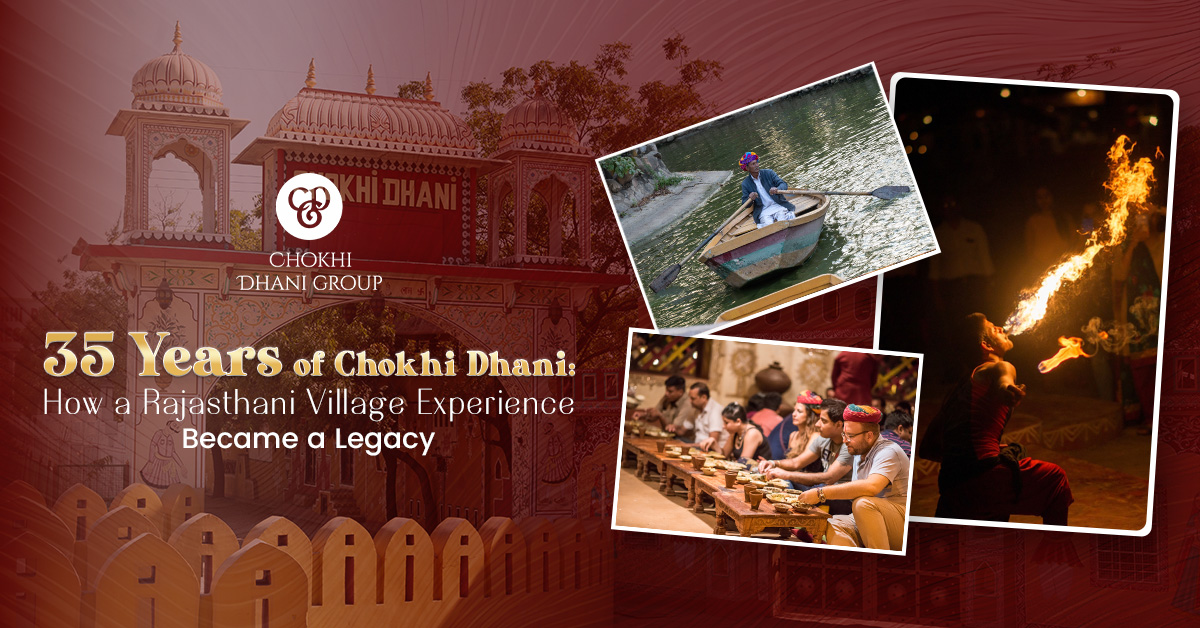
Chokhi Dhani was started in 1990 with a simple idea. The founders wanted to create one place near Jaipur where visitors could see, taste, and feel Rajasthan as it really is. Not only through buildings and costumes, but through food, music, art, and the way people host a guest.
The vision was to build a living village. Guests would walk on mud-style paths, sit on woven charpoys, listen to folk songs, watch local dances, taste regional dishes, and meet artisans at work. In simple terms, Chokhi Dhani was designed to be a cultural haven that brought together authentic North Indian and Rajasthani cuisine, traditional performances, handicrafts, and warm hospitality under one roof.
Three and a half decades later, that village idea has grown into a group of resorts, camps, restaurants, food products, and franchise villages. Yet the heart of the experience still feels close to the first sketch on paper.
Table of Contents
The Start of a Village Experience Near Jaipur
The first Chokhi Dhani Village on the outskirts of Jaipur was not planned as a large business. It was built as an evening destination where families and travellers could spend a few hours away from the city and see a slice of rural Rajasthan.
Folk dance and music performances
Puppet shows and small stage acts
Simple village games and rides
Craft stalls and handwork demonstrations
A full Rajasthani thali served in a set dining area
Word of mouth grew quickly. For many people, it became their first close contact with live folk culture, regional food and village life presented together in a clean, organised setting. Over time, regular guests began to refer to it as the best restaurant in Jaipur when they had relatives visiting from outside the state.
Food, Culture, and Hospitality at the Core
From the early days, three pillars shaped the experience.
Food
The thali was not meant to be a token sampler. Dal Baati Churma, gatta, kadhi, rotis of different grains, rice, churma, and sweets were cooked in a way that respected home and dhaba traditions. The idea was to serve complete meals that left guests satisfied rather than curious and still hungry.
Culture
Local artists were invited to perform their own forms, not a simplified version for tourists. Ghoomar, Kalbeliya, and other styles were presented with live music. Puppet shows, folk tales, and small street-style acts added to this fabric.
Hospitality
The greeting was personal, with a focus on respect for elders, care for children, and clear guidance for first-time visitors. This approach was drawn from the older Rajasthani habit of receiving guests at home, not from manuals.
These three elements created a routine. Families began to return with new friends, and for many tourists, a visit to the village became as important as seeing the city’s forts.
From an Evening Visit to A Complete Resort Stay
As the years passed, guests started asking a simple question. Could they stay overnight in the same setting instead of going back to the city hotel after dinner. This demand led to the creation of Chokhi Dhani Resort beside the village.
Cottages and suites were added around landscaped courtyards and lawns. A swimming pool, spa, indoor activities and multi-cuisine dining followed. Guests could now spend a full weekend or longer stay in the same cultural environment.
For many travellers who wanted both comfort and a sense of place, it slowly began to feel like the best resort in Jaipur. For someone searching for the best 5-star hotel in Jaipur with a strong local character, the property offered an experience that differed from the usual glass-fronted towers in busy areas.
Growing Beyond Jaipur
Once the model was established, the group started to take the ethnic hospitality idea to other locations. Each new unit followed the same core thinking, but adapted to the site.
In Jaisalmer, the Palace Hotel offers a city base with palace-style architecture, while the Desert Camp provides tented stays, cultural evenings, and desert activities.
In Indore, Chokhi Dhani Aangan gives an intimate version of the village and resort feel.
Through village franchises in places like Panchkula, Sonipat and Meerut, regional guests can access a Rajasthani village experience without travelling to Jaipur.
In London and Dubai, Chokhi Dhani runs dining-led spaces that bring Indian flavours, decor and selective cultural elements to an international audience.
In each case, the balance remains similar. Food and hospitality carry the weight, while architecture and performances set the tone.
New Arms of the Chokhi Dhani Family
Over time, the brand expanded into related areas that still connect to its roots.
Chokhi Dhani Foods produces ready-to-eat dishes, gravies, chutneys, pickles and sauces based on Indian recipes, making it easier for people to cook or serve familiar flavours at home.
Kalagram acts as a craft village and marketplace, where artisans from different states present textiles, metalwork, woodwork, jewellery and decor pieces.
These verticals widen the reach of the brand without forcing it into unrelated work. Food, craft, design and hospitality remain connected.
Changing Guests, Changing Expectations
The visitor profile has changed a lot in thirty-five years. Earlier, the majority of guests were local families or domestic tourists passing through Jaipur. Most arrived for an evening experience and a thali; a few stayed overnight.
Today, the mix includes:
Destination wedding groups from across India and abroad
International tourists who stay longer and plan ahead
Corporate groups use the resort for meetings and retreats
Repeat visitors who now arrive with the next generation
Their expectations have also shifted. Reliable rooms, good bedding, clean bathrooms, safe water, proper lighting, child-friendly spaces, internet access, and efficient check-in procedures are now basic requirements. Guests also expect clear communication before arrival and smoother handling of large groups.
Chokhi Dhani has answered this by upgrading infrastructure, training teams, working with better systems, and improving internal coordination, while keeping the essential village and resort charm intact.
The Rise of Weddings and Celebrations
One of the largest changes in the last fifteen years has been the growth of weddings at Chokhi Dhani. Families began to see that a single campus with multiple lawns, courtyards, terraces and indoor halls could handle all events in a multi-day celebration.
As guest lists and expectations grew, the resort became known as a reliable wedding resort in Jaipur, especially for couples who wanted a clear Rajasthani feel without losing basic comfort and order.
Looking Ahead
At thirty-five years, Chokhi Dhani has moved from a single village evening to a group with resorts, camps, restaurants, foods, and crafts. Yet its future still depends on a simple promise. A guest who arrives should be able to feel welcome, eat well, see something real, and leave with clear memories.
The road ahead will likely bring more locations, deeper digital tools for planning and booking, and more structured offerings for wellness, meetings and curated stays. But the guiding idea remains the same as in 1990. Chokhi Dhani will continue to present Rajasthan and Indian hospitality in a way that feels genuine, organised and warm, so that each new generation of visitors can say, in their own words, that they have experienced something that stays with them always.